
FurrJam:Hop In!
EASY PLAY GAME TECHNOLOGY LIMITEDCasual
4.9129.00 Reviews
- Version
- 15.0
- Installs
- 1.00M
- Age Rating
- Everyone
Screenshots
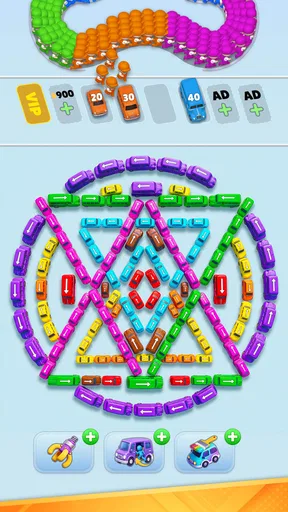

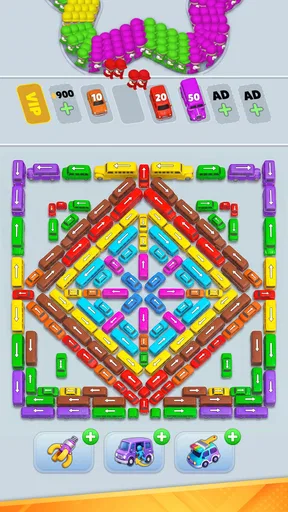
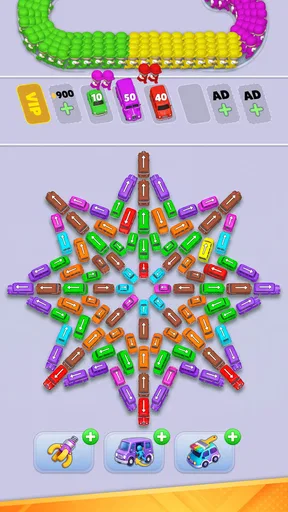
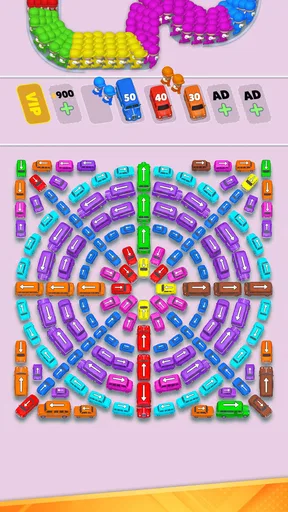
Our Review of FurrJam:Hop In!
 Analysis by Appyee
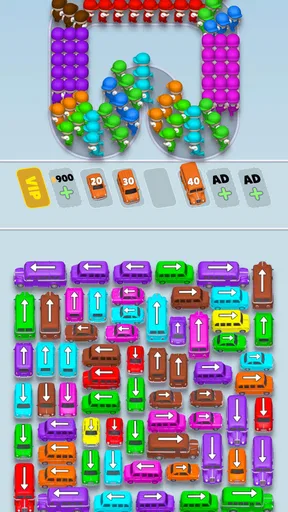
I spent my first sessions with FurrJam:Hop In! treating it as a quick casual game, the kind of thing I could open while waiting for a coffee or taking a short break. That first impression is accurate, but incomplete. Its central challenge is arranging traffic so the jam clears and movement can continue, which gives each puzzle an immediately readable goal. I never needed a long explanation before making my first move, and that low entry barrier is a major part of its appeal.
The game comes from EASY PLAY GAME TECHNOLOGY LIMITED and is free to start. It is aimed at Everyone, runs on Android 6.0 or later, and the current version is 15.0. Those details make it accessible to a wide range of casual players, especially anyone who wants a lightweight puzzle experience rather than a large, demanding game. The store presentation is brief, so the real question is not whether the premise is easy to understand. It is whether solving traffic jams remains satisfying after the first burst of novelty fades.
From an easy first session to a repeatable habit
The first-week appeal comes from the simple relationship between observation and action. I look at the blocked traffic, decide which movement needs to happen first, and then test whether that decision opens enough space for the rest. Even when a solution feels obvious, there is a small pleasure in seeing the jam unwind. That visual payoff gives the game a satisfying rhythm without asking me to learn complicated controls.
What makes this more engaging than a completely passive time-filler is that the puzzle still asks for planning. Moving the most visible vehicle is not always the smartest first step. I found myself checking the edges of the board, identifying which pieces were preventing several others from moving, and trying to preserve open space instead of reacting to the first blockage I noticed. This is a useful habit for new players: before tapping, look for the move that removes a bottleneck rather than the move that merely looks available.
The compact format suits everyday interruptions well. I can play a little, put the phone down, and return without needing to remember a story, a character build, or a complicated objective. That makes it a good companion for a commute, a waiting room, or a short break between tasks. It is also approachable for someone who does not normally play puzzle games, because the traffic theme communicates the problem more clearly than an abstract grid would.
At the same time, I would not describe it as a replacement for a deep strategy game. The pleasure is concentrated in solving the immediate arrangement, not in developing a long-term plan across a campaign or managing a persistent system. Players looking for rich narrative, competitive ranking, or elaborate progression may find the experience too focused. Its strength is the small, self-contained mental exercise.
The game’s popularity suggests that this formula has broad reach: it has passed one million installs and holds a 4.9 average from around forty-one thousand ratings. I see those numbers as evidence that the basic idea connects with many players, not as a guarantee that every session will feel fresh. Casual puzzle games often win people quickly because their rules are clear. Keeping them interested requires enough variation in the situations, pacing, and sense of accomplishment.
How I approached the puzzles
My most reliable approach was to pause before making a move and trace the likely consequences. If one vehicle could leave immediately, I asked whether its departure would actually help or simply expose another obstruction. When several routes seemed possible, I preferred the one that created room for multiple follow-up moves. This reduced the feeling of randomly tapping and made difficult boards feel more like problems I could reason through.
A second useful technique was to avoid spending every available opening at once. A crowded board can become harder if I move pieces without preserving a clear lane for the next step. I started treating empty space as a resource rather than a by-product. That change sounds minor, but it made the game more deliberate and gave me a better way to recover when an early decision was not ideal.
For a relaxed player, this creates a nice balance: the game is easy to begin, yet it rewards a little patience. For a child or a new puzzle player, the same simplicity can make the rules comfortable. For an experienced player, the attraction depends on whether later situations continue to demand careful sequencing rather than repeating the same obvious pattern. That is the point at which long-term value becomes more important than first impressions.
What remains valuable after the novelty fades
After the first month, I think the game’s usefulness depends on what I want from a mobile game. If I value short, self-contained challenges, it can keep a place on my phone because it does not require a large time commitment. I can use it as a mental reset: a few minutes of focusing on order, space, and consequences can feel more engaging than endlessly scrolling. That recurring use is modest, but it is genuine.
The best long-term scenario is for players who enjoy gradual improvement in their own solving habits. I became quicker at spotting bottlenecks and less likely to make a move simply because it was available. The game does not need to become a serious intellectual project to provide that benefit. Its value is closer to a small daily exercise in visual planning, especially when I want something interactive but not emotionally demanding.
There is also a practical social use. I could hand the phone to a friend or family member and explain the objective almost immediately. That makes it more suitable for casual sharing than games with lengthy tutorials or complex controls. One person can suggest a move while another handles it, turning a solitary puzzle into a brief cooperative discussion. The experience remains simple, but the decision-making gives people something concrete to talk about.
Still, I would be careful about expecting endless variety. A traffic-jam puzzle lives or dies by the quality of its arrangements. If the layouts begin to feel like familiar variations on the same obstruction, the basic satisfaction can weaken. The game is strongest when I am solving rather than merely repeating a routine. Anyone who burns through casual puzzles quickly may reach that fatigue point sooner than someone who plays in short bursts.
The free price helps with experimentation, but it does not automatically make the game frictionless. In-app purchases range from $1.99 to $99.99 per item, so I would approach optional spending thoughtfully. A free-to-start game can be perfectly enjoyable without purchases, but players should decide in advance whether they want to spend anything rather than making an impulsive choice during a difficult or repetitive stretch. For families, that is especially worth discussing before handing the phone to a child.
The age rating of Everyone broadens its audience, but it does not change the basic recommendation. Younger players may enjoy the colorful traffic idea and immediate goals, while adults may appreciate the quick mental break. The better fit is determined less by age than by tolerance for repetition. Someone who likes calm, straightforward puzzles may return often; someone who needs constant novelty may not.
Where it fits beside other casual games
Compared with an action-oriented casual game, this is a calmer choice. There is no need for fast reactions to enjoy the central challenge; careful observation matters more. That makes it a better option when I want to slow down, play quietly, or avoid the pressure of a timed contest. On the other hand, players who enjoy rapid feedback, dramatic effects, or direct competition may prefer an arcade-style alternative.
Compared with a traditional match-style puzzle, the focus feels more sequential. I am not mainly searching for combinations or reacting to falling pieces. I am trying to understand how one movement changes the available space for everything else. That gives the game a more deliberate character, though it may feel less immediately exciting to someone who prefers constant visual activity.
Compared with a large strategy title, the advantage is convenience. I do not need to remember a broad economy, a roster, or a long-term campaign. The trade-off is depth: the decisions are concentrated inside the current traffic arrangement rather than spread across a larger system. I would choose this game for a short reset, not for an evening of sustained strategic planning.
Maintenance, fatigue, and the cost of keeping it installed
The maintenance burden is relatively low in the everyday sense. There is no complicated personal setup to manage, and the core activity can be understood whenever I return. That matters because games that require frequent housekeeping often lose their place on my phone even when they are enjoyable. Here, the main maintenance task is simply deciding when the experience still feels rewarding instead of letting it become automatic tapping.
My practical advice is to use it in defined windows. A short session during a break preserves the feeling of a small challenge. Playing for too long in one sitting can make similar traffic arrangements blur together, especially if I am no longer thinking carefully. Stopping after a satisfying solve is more effective than continuing until the game feels like a chore. This is one of those casual titles that benefits from restraint.
The first source of fatigue is repetition. The traffic-jam concept is clear and appealing, but clarity can become predictability if the puzzles do not keep asking different questions. I noticed that my interest was highest when I had to reconsider my first assumption. When the correct sequence was too apparent, the game became more like a routine than a puzzle.
The second source is frustration around mistakes. In a sequencing game, one early move can make the remaining layout feel worse, even when the original decision seemed reasonable. I found it helpful to slow down and treat a failed attempt as information about the board rather than as a reason to rush. Players who dislike restarting or reconsidering a chain of moves may find this more irritating than relaxing.
The third issue is the balance between free access and optional purchases. The game is free, which lowers the barrier to trying it, but the presence of purchasable items means spending can become part of the experience for some players. I would not install it expecting every possible convenience to be included without conditions. I would install it because the basic puzzle loop is worth testing on its own, then decide whether the free version provides enough value for my habits.
Version 15.0 is the current release, and the game supports Android devices running version 6.0 or newer. For most people, compatibility should be straightforward, but I still recommend checking the device before committing to a regular routine. A casual game earns long-term space when it opens reliably and feels comfortable in the hand; technical suitability is part of that judgment even when the gameplay itself is simple.
One subtle trade-off is that accessibility can work against longevity. Because I can understand the objective almost instantly, there is little learning friction. That is excellent for a quick start, but it also means the game must rely on puzzle variation rather than a growing rule set to maintain interest. I would recommend it more confidently to players who enjoy repeating a familiar activity with changing arrangements than to players who need new mechanics every few sessions.
Who should keep playing and who should move on
I think this is a good fit for someone who wants a clean, casual puzzle about clearing blocked traffic, especially if that person prefers planning over reflexes. It also suits households looking for an approachable game that can be explained in a sentence and shared for a few minutes. The Everyone rating, free entry point, and broad device support make it easy to try without turning the first decision into a major commitment.
I would be more hesitant to recommend it to players who want a story, character progression, multiplayer competition, or a deep strategic framework. It is also not my first choice for someone who becomes bored when a central mechanic repeats. A match game, arcade title, or larger strategy game may offer better lasting value in those cases, depending on whether the player wants speed, variety, or complexity.
For parents, the sensible approach is to treat the game as a casual puzzle rather than assume that a child-friendly rating answers every practical question. The purchase range deserves attention, and playtime still benefits from boundaries. For adults, the main question is whether the game helps you take a useful short break or simply fills every spare moment with another similar board.
My final judgment is positive but measured. FurrJam:Hop In! earns lasting space when I use it as a compact thinking break, not when I demand an endlessly expanding game. Its traffic-clearing premise is easy to enter, its planning loop has more substance than the short summary suggests, and its free starting point makes trying it sensible. The limitations are equally clear: repetition can set in, mistakes may frustrate, and optional purchases require self-control.
With an average of 4.9 from around forty-one thousand ratings and more than one million installs, it has clearly found an audience. My own recommendation is to play it in short, intentional sessions during the first week, then reassess after the initial curiosity passes. If you still enjoy looking for the move that unlocks the whole jam, keep it. If you are tapping mechanically or wishing for richer systems, uninstalling it is not a failure; it simply means this focused casual format has done all it needs to do.
Verdict
Strengths of FurrJam:Hop In!
- Quick, casual rounds that are easy to start and finish.
- Bright, playful visuals give the game a friendly personality.
- Simple controls make it approachable for younger players.
- Good choice for short breaks or relaxed solo play.
- The hopping theme feels cheerful and different from typical games.
Limitations of FurrJam:Hop In!
- Gameplay may feel repetitive after extended sessions.
- Progression can seem limited for experienced players.
- Some stages may rely more on timing than strategic depth.
- Small-screen controls can occasionally feel imprecise.
- Players seeking competitive multiplayer may find it lacking.
Other Releases by EASY PLAY GAME TECHNOLOGY LIMITED
View All
Hexascapes - Block Puzzle
Casual4.9
Similar Picks in This Category
View All
My Talking Angela
Outfit7 Limited4.2

My Talking Tom
Outfit7 Limited4.3

Pou
Zakeh4.2

My Talking Tom 2: Pet Game
Outfit7 Limited4.3

Candy Crush Saga
King4.6

Bridge Race
Supersonic Studios LTD4.1
Frequently Asked Questions
What is FurrJam:Hop In!?
FurrJam:Hop In! is a social and entertainment app centered around furry-themed interaction and community participation. After exploring the app, its main appeal appears to be discovering creative content, meeting people with similar interests, and joining conversations or activities in a welcoming environment. The experience may vary depending on the current community, available events, and the features offered in your region or app version.
Is FurrJam:Hop In! free to download and use?
FurrJam:Hop In! can generally be downloaded without an upfront purchase, but users should review the store listing and in-app information before registering. Some features, digital items, events, or optional upgrades may require payment. A stable internet connection is also recommended, since much of the app’s social content and interactive functionality depends on online services rather than offline access.
Do I need to create an account to use FurrJam:Hop In!?
An account may be required for the most important parts of FurrJam:Hop In!, particularly if you want to participate in the community, personalize a profile, interact with other users, or save your activity. Before signing up, check which details are requested and review the privacy policy. Avoid sharing sensitive personal information publicly, even when the app feels friendly and informal.
Is FurrJam:Hop In! safe for children and teenagers?
Parents should check the official age rating, privacy options, and community guidelines before allowing a child or teenager to use FurrJam:Hop In!. Because the app includes social interaction and potentially user-generated content, conversations may not always be predictable. Younger users should use privacy controls, avoid private contact with strangers, and have parental supervision when creating an account or joining community activities.
What should I check before downloading FurrJam:Hop In!?
Before downloading FurrJam:Hop In!, confirm that your Android or iOS device meets the required operating-system version and has enough free storage. It is also worth checking recent user reviews, permissions, subscription details, and the developer’s privacy information. Since social apps can change quickly, verify that the current version still offers the features you want and that the service is available in your country.
Play our best games!


